




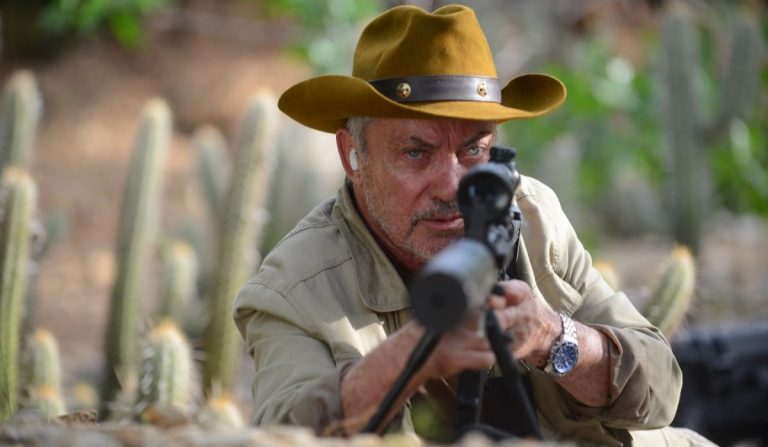
 Udo Kier in BACURAU
 23 current and historical films // panels on human rights situation and contemporary Brazilian filmmaking // program also features photography and video art exhibitions
With twelve short and eleven feature-length films, including a host of premieres, this year’s Focus program at exground filmfest offers a look at the vibrant world of Brazilian cinema. Among the highlights are a once-banned classic epos by Glauber Rocha as well as contemporary productions from award-winning directors such as Kleber Mendonça Filho, Juliano Dornelles and Karim Aïnouz and exciting works by emerging Brazilian film scene talents. In addition, a short film series curated by Carsten Spicher (Oberhausen International Short Film Festival) will take viewers on a journey through time illuminating the country’s social and political context. Finally, the Focus program also includes a multi-faceted supporting program, with photo and video art exhibitions and panels on human rights, environmental policy and the situation of contemporary filmmakers under the Bolsonaro regime featuring high-calibre participants. As in past years, selected films from the Focus program will also be shown in Frankfurt am Main and Darmstadt following the festival.
“The Focus is particularly interesting as a snapshot on the eve of radical societal and cultural-political changes – triggered by the inauguration of Jair Bolsonaro in January 2019 –that will no doubt fundamentally impact Brazilian cinema,” explained curator Amos Borchert regarding the choice of this year’s exground Focus country. “In addition, with our selection of brave variations on genre cinema and brilliant auteur films we aim to show the cinematic range of this special film country.”
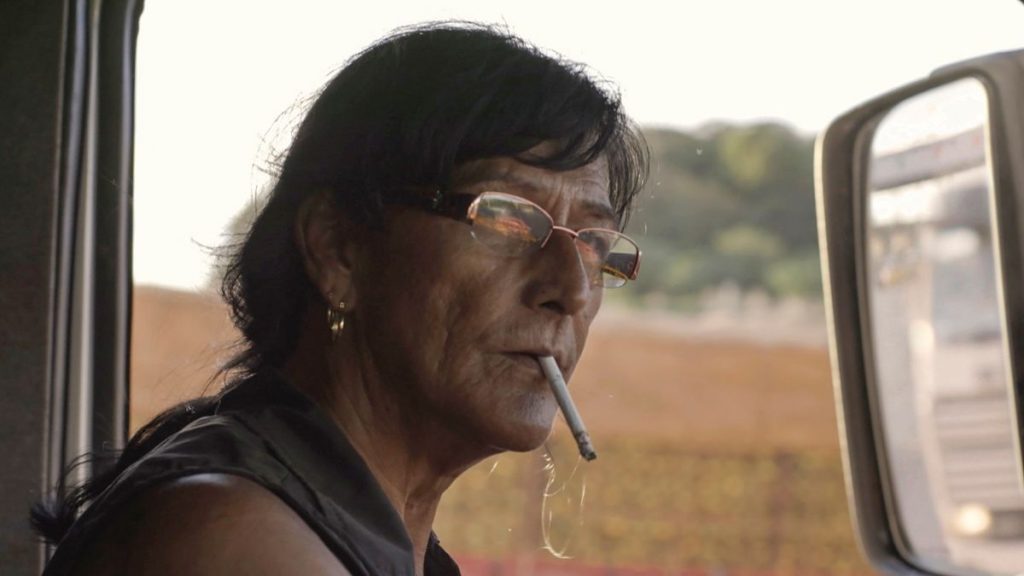
FABIANA by Brunna Laboissière 
Carol Duarte in THE INVISIBLE LIFE OF EURÍDICE GUSMÃO
Women Behind the Camera: Trans-Identities, Female Solidarity and Feminism
A great number of the stories presented in this year’s focus program are
told from the perspective of female directors and cinematographers. For
instance, in her first feature-length documentary film FABIANA,
Brunna Laboissière paints a witty and bitter-sweet portrait of the
eponymous protagonist, a transwoman and trucker who has criss-crossed
the country at the wheel of a 30-tonner for the past three decades. In
spite of the tough exterior gained from so much time on the road,
Fabiana’s enthusiasm for the diverse encounters she has had in her
travels is contagious. Director and cinematographer Brunna Laboissière,
who is also a member of this year’s international jury, will be on hand
in Wiesbaden for the German premiere of her film.
Multi-award-winning cinematographer Hélène Louvart is responsible for the precise image composition in Karim Aïnouz’s THE INVISIBLE LIFE OF EURÍDICE GUSMÃO (A VIDA INVISÍVEL DE EURÍDICE GUSMÃO).
Louvart’s camerawork bathes this drama about two sisters in 1950s Rio
de Janeiro in a sensual atmosphere full of vibrant colour.
The feminist documentary fiction BARONESA deals with
female solidarity. In the film, director Juliana Antunes, who will be
presenting her work in person at exground filmfest, follows two female
friends around the favelas of Belo Horizonte in their everyday lives
marked by violence, as they joke around, chat about sex and try to beat
the heat.
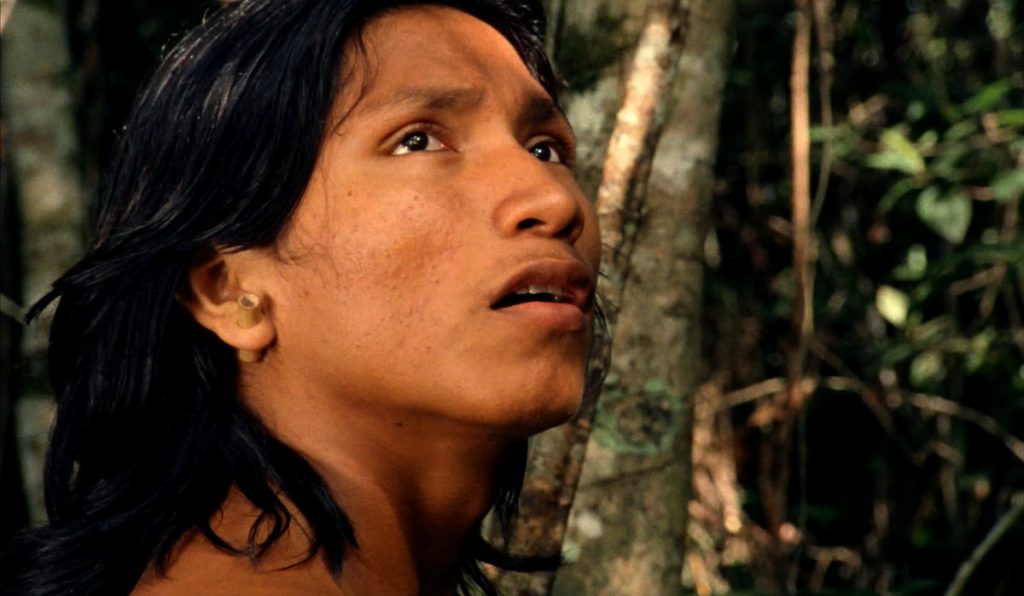
Henrique Ihjãc Krahô in THE DEAD AND THE OTHERS 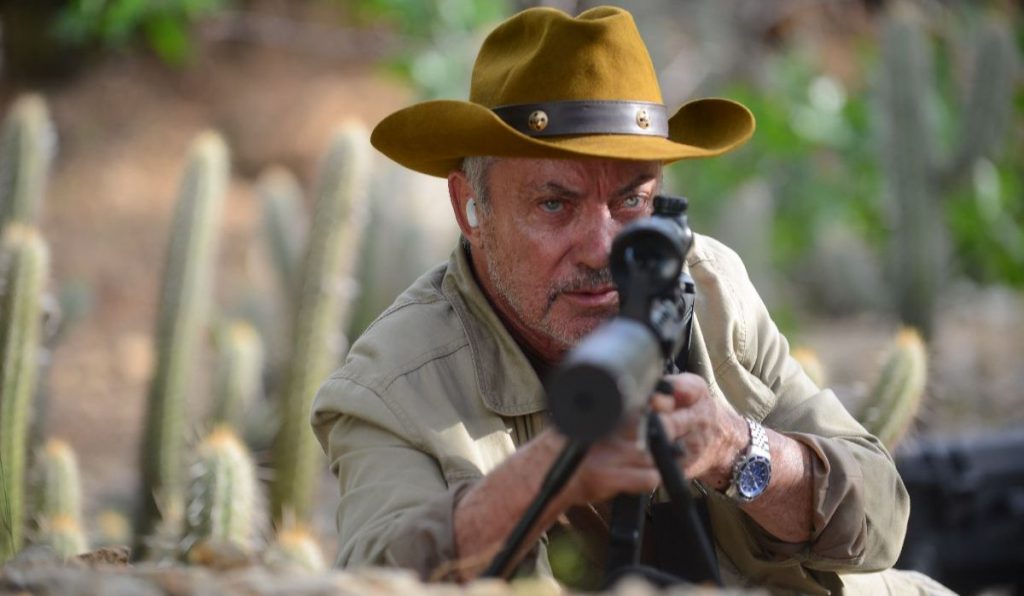
Udo Kier in BACURAU
Self-Assured Genre Films
A collection of sure-handed approaches to genre cinema makes up a
further central section of the Focus program, like the exground opening
film THE FATHER’S SHADOW (A SOMBRA DO PAI) by Gabriela
Amaral Almeida. Following her mother’s passing and inspired by countless
horror films, nine-year-old Dalva decides to face death head-on. Amaral
Almeida pulls off a psychologically sophisticated family melodrama that
feeds on fantasy and horror tropes.
The boundaries between magic and reality are blurred in THE DEAD AND THE OTHERS (CHUVA É CANTORIA NA ALDEIA DOS MORTOS)
by João Salaviza and Renée Nader. In an attempt to escape a
foreordained career as a shaman, young Ihjãc leaves his rainforest
village for a provincial city. Shot on 16mm stock, the film is
enchanting not only for its reserved, semi-documentary approach to
narrative, as its colours, moods and motifs are equally mesmerising.
The boundaries between fiction and reality are also fluid in CALYPSO by Rodrigo Lima and Lucas Parente. With its associative imagery, CALYPSO takes
up the story of the real historical figure Luz del Fuego (1917–1967),
actress, snake dancer and founder of Brazil’s first nudist club. The
directors interweave archival materials of this modern, feminist “witch”
with intense shots of nature, performative elements and breath-taking
sound design. Rodrigo Lima is expected to attend the German premiere of
his film in Wiesbaden.
In their award-winning work BACURAU, Kleber Mendonça
Filho and Juliano Dornelles have concocted a refreshing hybrid combining
elements of the science fiction and western genres. In BACURAU, the
inhabitants of the eponymous village must fight back with all they’ve
got when a group of American tourists attempts to hunt them down for
sport. This unpredictable film is an emphatic wake-up call regarding the
inhumanity of Brazil’s current extreme-right-wing turn.
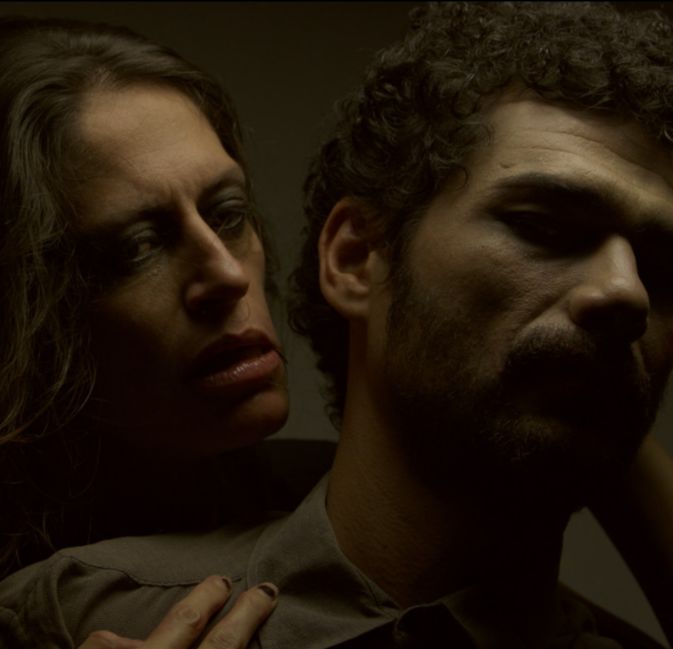
THE SLEEPWALKERS by Tiago Mata Machado 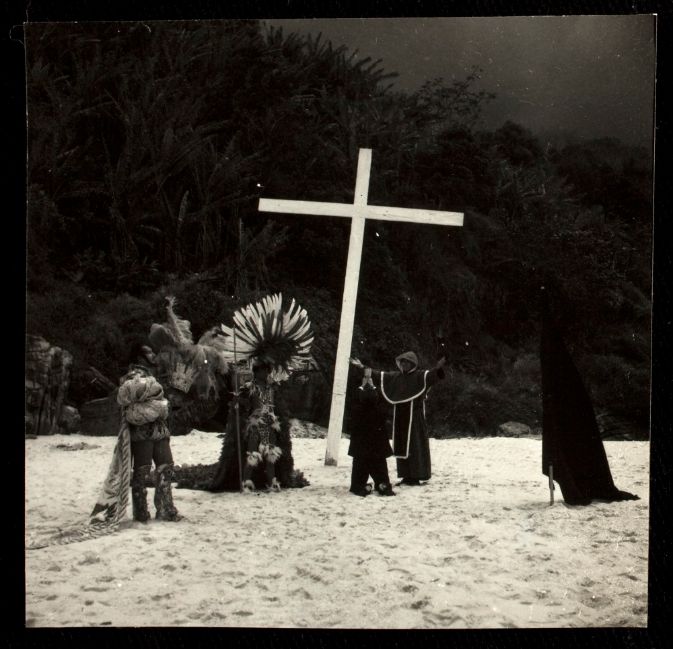
ENTRANCED EARTH by Glauber Rocha
Highly Topical Political Parables
In addition to BACURAU, other films in the Focus program examine the
effects of fascism, dictatorship, corruption and environmental
devastation and can be interpreted as allusions to the current political
situation in Brazil under President Jair Bolsonaro. With THE SLEEPWALKERS (OS SONÂMBULOS),
Tiago Mata Machado delivers a Kafkaesque political parable of fascism,
resistance and freedom. exground filmfest is proud to host the German
premiere of this compelling work.
In a similar vein, exground will be presenting a historical document created in the era of Brazil’s military dictatorship: ENTRANCED EARTH (TERRA EM TRANSE)
by Glauber Rocha, a leading proponent of the Brazilian “Cinema Novo”
movement. Released in 1967, the film, set in the fictional land of
Eldorado, relates the tale of the poet and intellectual Paulo, who
serves various political leaders only to lose his life in the end. The
multi-award-winning cult classic is notable for its charmingly composed
dialogue and lavish sets.
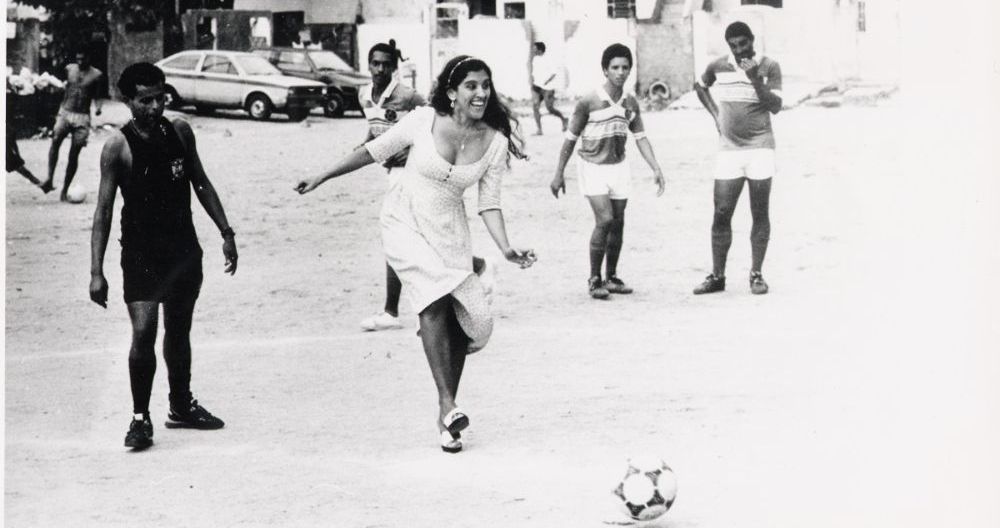
DIE BRASILIANISCHE ERFAHRUNG: LÁ E CÁ by Sandra Kogut, Brazil 1995 
FRAGILE TRÄUME: FLESH (CARNE) by Camila Kater, Brazil/Spain 2019
Focus Short Films: Examining Current and Historical Events
The social and political conditions in Brazil from 1985 on,
characterised by brutal military dictatorship, the difficult transition
to democracy and the democratisation of the country’s media, are treated
by the five short films featured in the program DIE BRASILIANISCHE ERFAHRUNG (THE BRAZILIAN EXPERIENCE), curated by Carsten Spicher (Oberhausen International Short Film Festival).
The series FRAGILE TRÄUME (FRAGILE DREAMS) showcases
contemporary Brazilian short films that exhibit a high degree of formal,
aesthetic and thematic diversity. From documentary musical and poetic
experimental film to passionate work of protest, colourful tragicomedy
to imaginative animated film, the selection here runs the gamut.
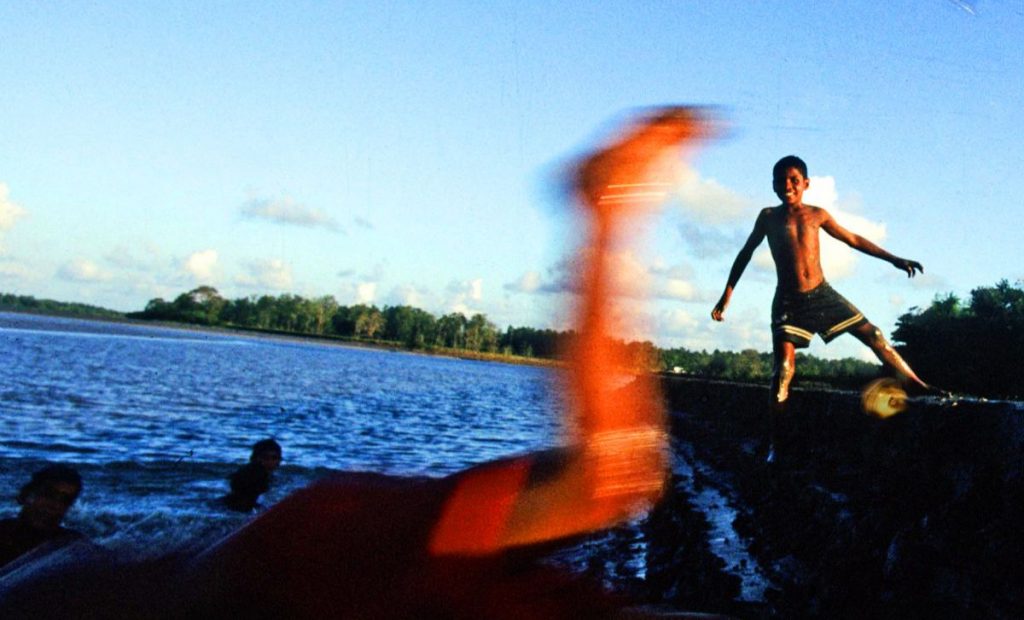
BRAZIL – PHOTOGRAPHS BY ANJA KESSLER 
Video work: O PEIXE (THE FISH) by Jonathas de Andrade
Focus Supporting Program: Society, Politics and Art in Brazil
In the supporting program, two panel discussions will examine the
devastating effects of the current Bolsonaro presidency. One panel will
feature a screening of the documentary film INVASÃO À AMAZÔNIA by Martin Keßler, which deals with the struggle of the indigenous population against the destruction of the rain forest.
Following the film, the director will be joined by journalist Wolfgang
Kunath and international law expert Dr. Lothar Brock for a discussion.
In the scope of another panel, director Brunna Laboissière (FABIANA) and
curator and distributor Daniel Queiroz will delve into the current situation for Brazilian filmmakers under the moderation of Latin America expert Dr. Peter W. Schulze.
Finally, two art exhibitions also offer insight into Brazilian society. The photography exhibition BRAZIL – PHOTOGRAPHS BY ANJA KESSLER features the artist’s unique perspective of Brazil and its people, beyond worn-out clichés. Jonathas de Andrade’s video work O PEIXE (THE FISH)
will be on view at Nassauischer Kunstverein; the piece is inspired by a
ritual practiced in a village on Brazil’s northeast coast wherein
fishermen hug the fish that they have just caught.
The full program for exground filmfest 32 will be available from 28 October 2019 at www.exground.com.
exground filmfest would like to thank all of its supporters and sponsors.
END OF PRESS RELEASE
Press Contact
( ( ( NOISE Film PR ) ) )
Dagny Kleber
+49 (0) 171 – 402 48 03
exground@noisefilmpr.com